
Cleaning out your home can seem like a daunting task, but with the right strategies, it doesn’t have to be overwhelming. Whether you’re moving, decluttering, or just need a refresh, these essential tips will help you tackle the process with ease and confidence.
1. Set Clear Goals Before You Begin
Start with a clear vision of what you want to achieve. Setting specific goals will provide direction and motivation, helping you stay on track throughout the cleanout process. Consider areas that require the most attention first, and determine if you want to donate, sell, or simply discard unwanted items. This initial planning will help streamline your efforts and make each step more decisive.
2. Create a Realistic Timeline
Break down your tasks into manageable chunks and create a timeline. This prevents burnout and ensures that you’re making consistent progress without feeling rushed. Allocate specific days to tackle certain rooms or tasks, allowing flexibility for unexpected delays. By pacing yourself, you maintain momentum and avoid fatigue, making the entire process more sustainable.
Remember that even small steps forward contribute significantly to the overall goal. Celebrate these small wins to keep your energy levels high and maintain your motivation. This methodical approach not only enhances efficiency but also makes the experience more enjoyable.
3. Gather Necessary Supplies
Having the right tools on hand makes the process smoother. Stock up on boxes, bags, markers, and labels to categorize items effectively as you sort. Consider using eco-friendly options, like biodegradable trash bags, to make your cleanout both efficient and environmentally conscious. A well-stocked supply set means less interruption midway through sorting.
In addition to basic organizing tools, include cleaning supplies such as gloves and disinfectants. You’ll be able to clean areas as you declutter, leaving spaces both neat and sanitary. Also, consider investing in a sturdy stepladder and durable storage containers, especially if you’re organizing spaces like basements or attics.
4. Tackle One Room at a Time
Focus on one area at a time to avoid feeling overwhelmed. Completing one room before moving to the next gives a sense of accomplishment and keeps the momentum going. Start with the less cluttered spaces where the task seems more feasible and gradually work your way to the more challenging areas.
This approach also allows you to develop an effective rhythm and strategy that you can apply as you proceed from one room to another. As each space transforms, you’ll feel more motivated and energized to tackle the next, turning a potentially chaotic task into a series of manageable efforts.
5. Implement the Four-Box Method
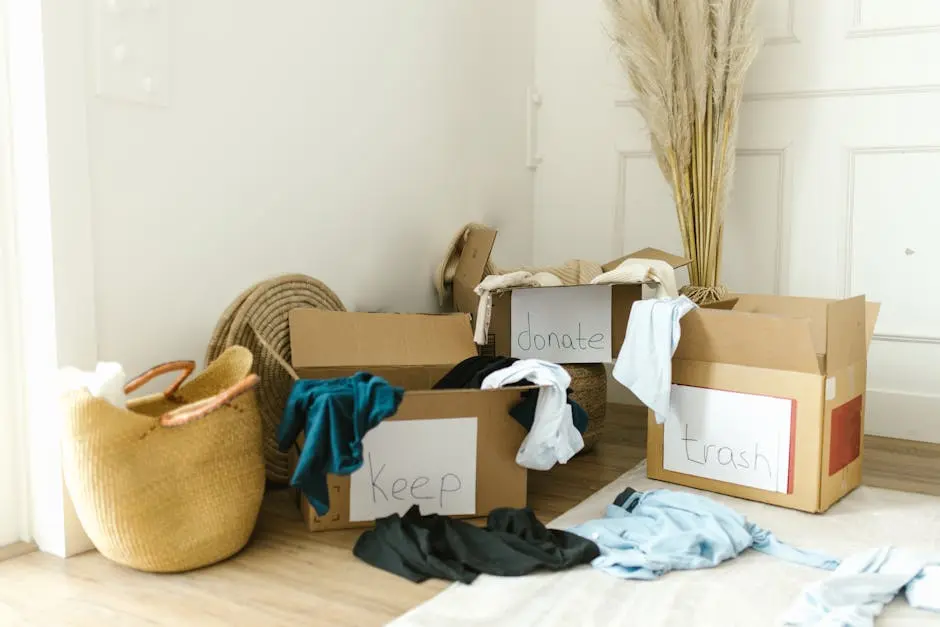
Use four boxes labeled as ‘Keep,’ ‘Donate,’ ‘Sell,’ and ‘Trash.’ This method helps simplify decision-making and streamlines the sorting process. As you pick up each item, decide which box it belongs to, and move on without lingering over uncertain decisions. Having clear categories cuts down on confusion and makes the process systematic.
This method also fosters a sense of responsibility and sustainability. By being deliberate about what to keep or discard, you contribute to reducing waste and finding new homes for items that still hold value. Plus, it’s rewarding to know your donations will benefit others.
6. Enlist Help When Needed
Don’t hesitate to ask for help. Friends, family, or even professional organizers can provide valuable support and make the job more enjoyable. A fresh perspective can help identify items you may be too attached to, and their company can turn a tedious task into a fun, productive time.
Consider hosting a sorting party where friends or family can help, and in exchange, you provide snacks and refreshments. This collaborative effort transforms the chore into a social event, making the experience less daunting and more engaging.
7. Stay Hydrated and Take Breaks
Remember to take care of yourself. Staying hydrated and taking regular breaks will maintain your energy levels and keep your spirits high. It’s easy to get lost in the task, forgetting to pause and recharge. Set a timer to remind yourself to stop for water breaks and snacks.
Additionally, taking breaks offers a mental reset, allowing you to come back to the task with a fresh perspective and renewed energy. Even a short stroll outside can reinvigorate and inspire you to continue with increased efficiency.
8. Prioritize Sentimental Items Last
Leave emotionally charged items for last. By dealing with other items first, you’ll be in a better frame of mind to make thoughtful decisions about keepsakes. Emotional decisions can be draining, so it’s best to approach them when you’re mentally prepared, reducing the stress of potentially letting go of cherished items.
For some, taking photos of sentimental items before parting with them can preserve memories without adding clutter. This way, you capture the essence without holding onto the physical item, allowing for a smoother transition to a more organized space.
9. Embrace Minimalism
Consider a minimalist approach to declutter and simplify your living space. This philosophy encourages keeping only what is truly necessary or brings joy. Adopting minimalism doesn’t mean sacrificing comfort but rather focusing on quality over quantity, leading to a more meaningful and less cluttered life.
Start small by assessing which areas contribute most to clutter, then create systems to maintain that simplicity, such as regular reviews of wardrobe contents or kitchen gadgets. Over time, you’ll appreciate how integrating minimalist principles transforms your home and mindset, promoting peace and efficiency.
10. Celebrate Your Achievements
Once your home is clean and organized, take the time to enjoy your renewed space. Celebrate your hard work and the positive changes you’ve made. Organizing a small gathering in your refreshed home can be a great way to share your accomplishments and inspire others to undertake their decluttering projects.
Rewarding yourself for the effort can foster a positive association with home maintenance, ensuring it becomes a consistent habit rather than an occasional necessity. Acknowledging and appreciating your efforts turns the cleanout into a fulfilling journey rather than a burdensome task.